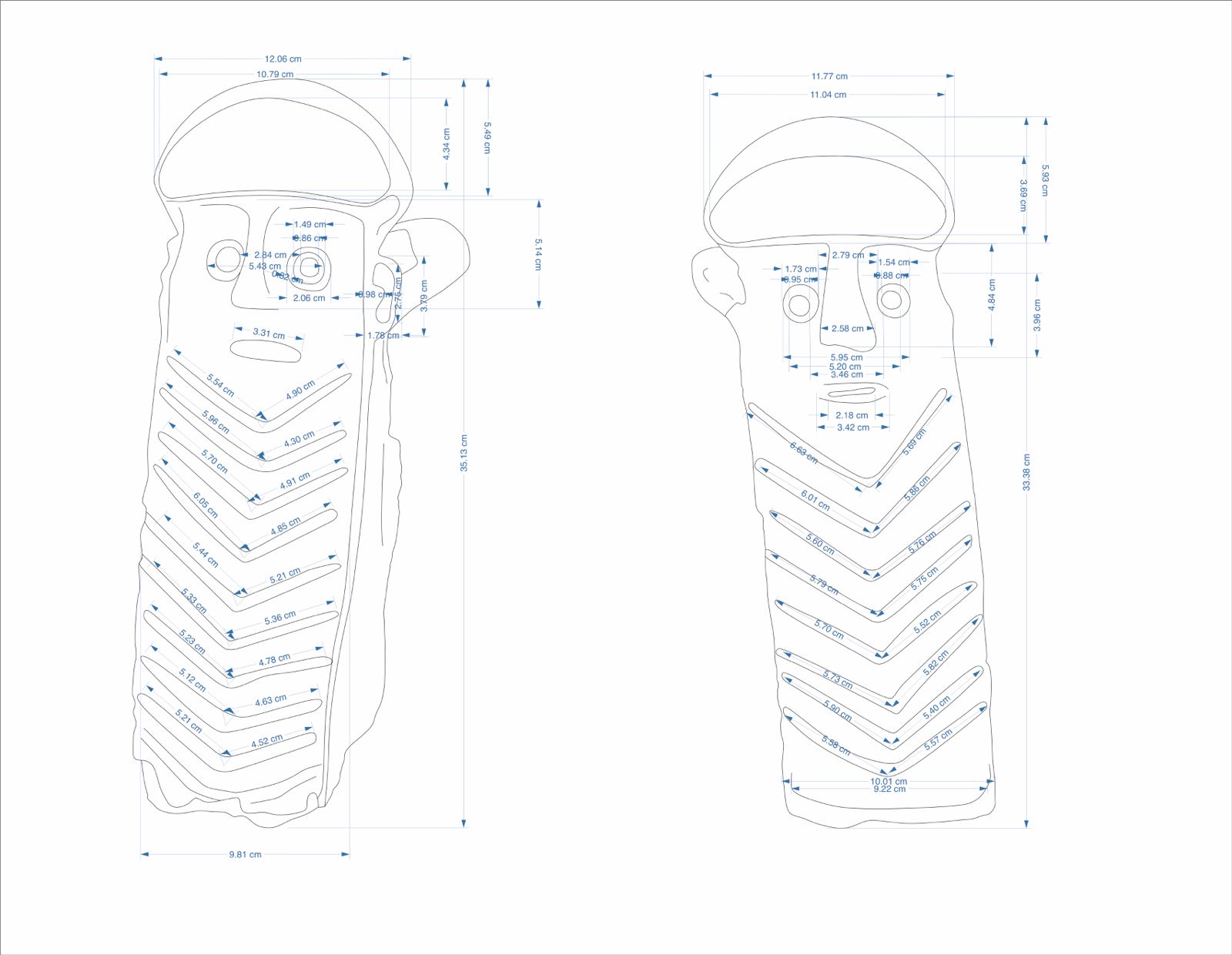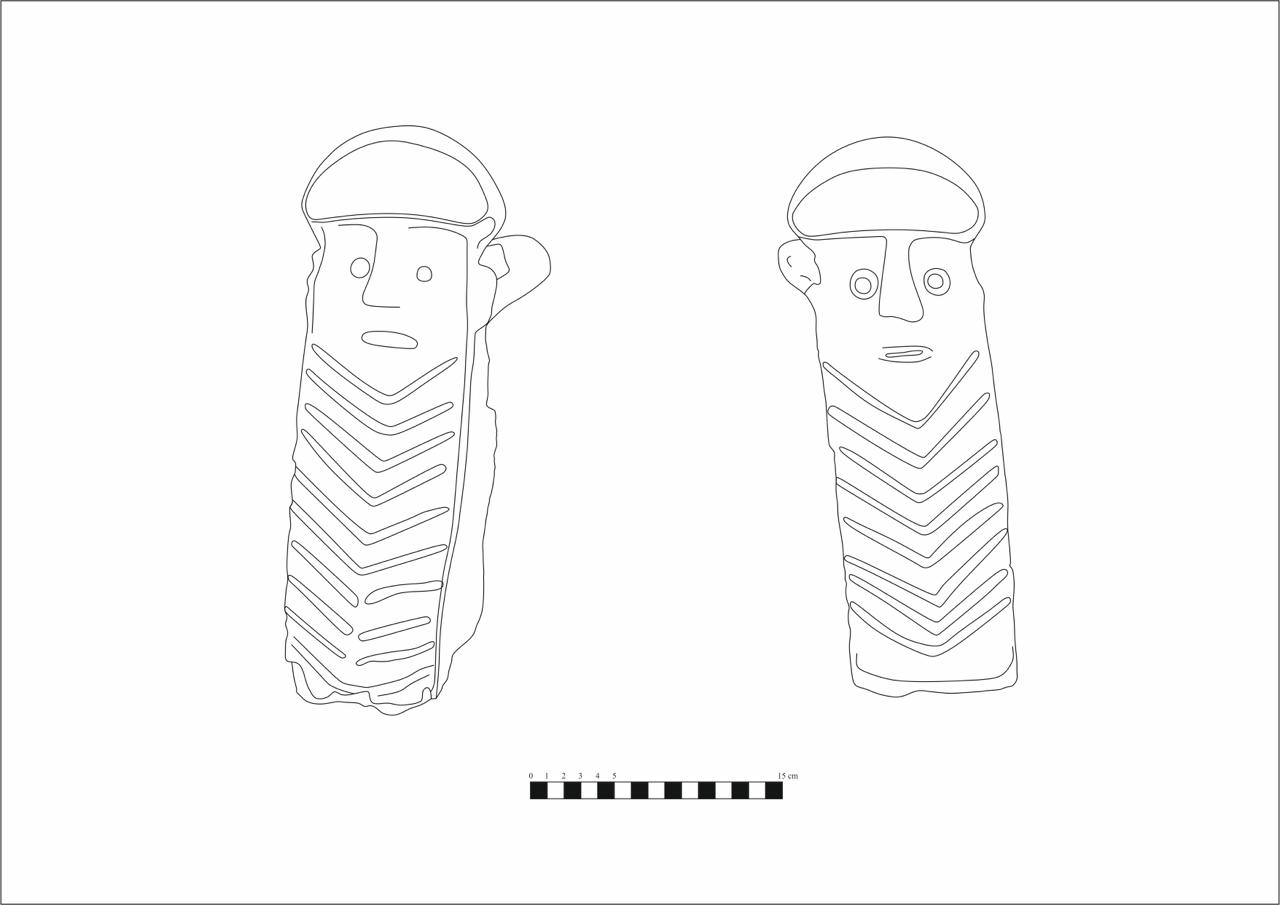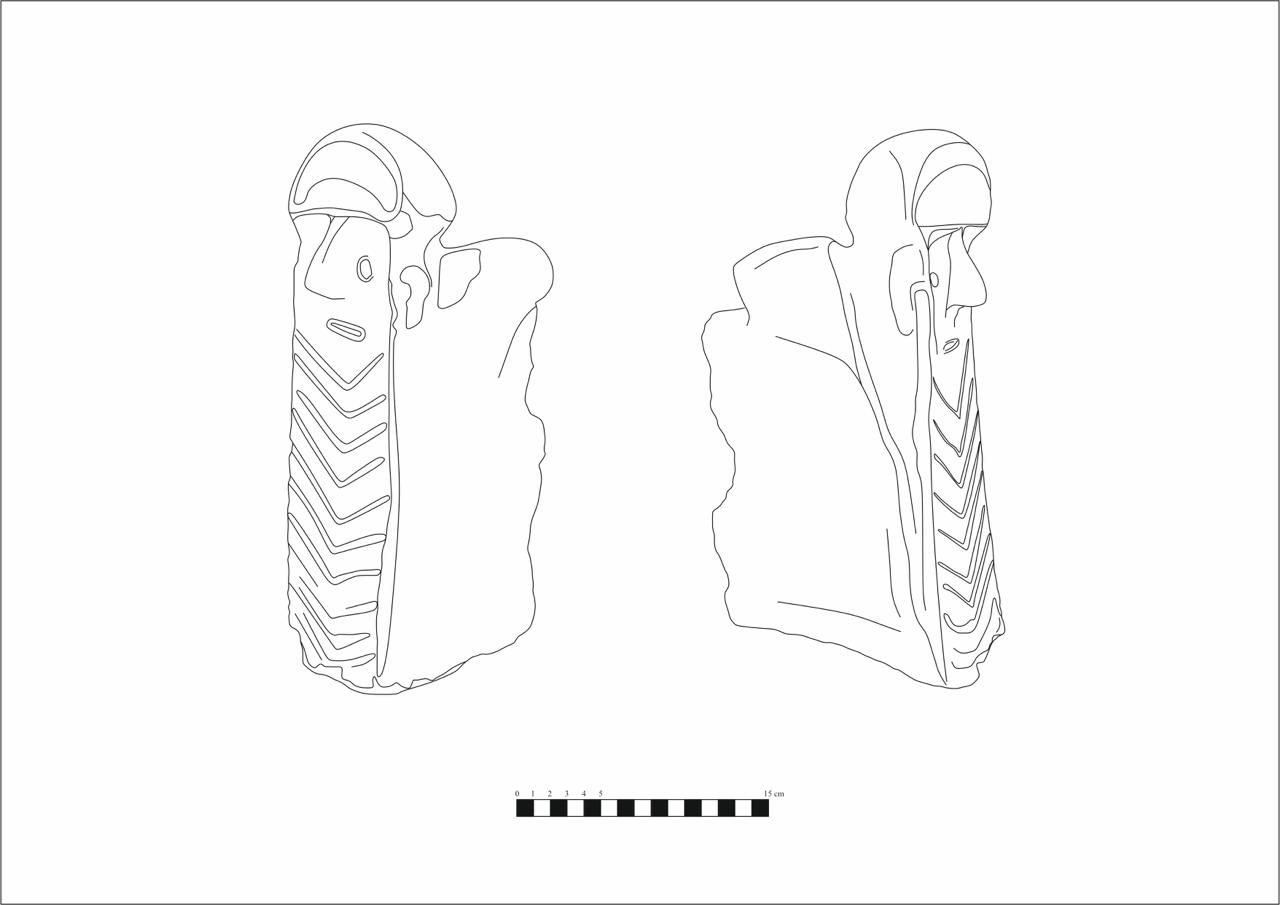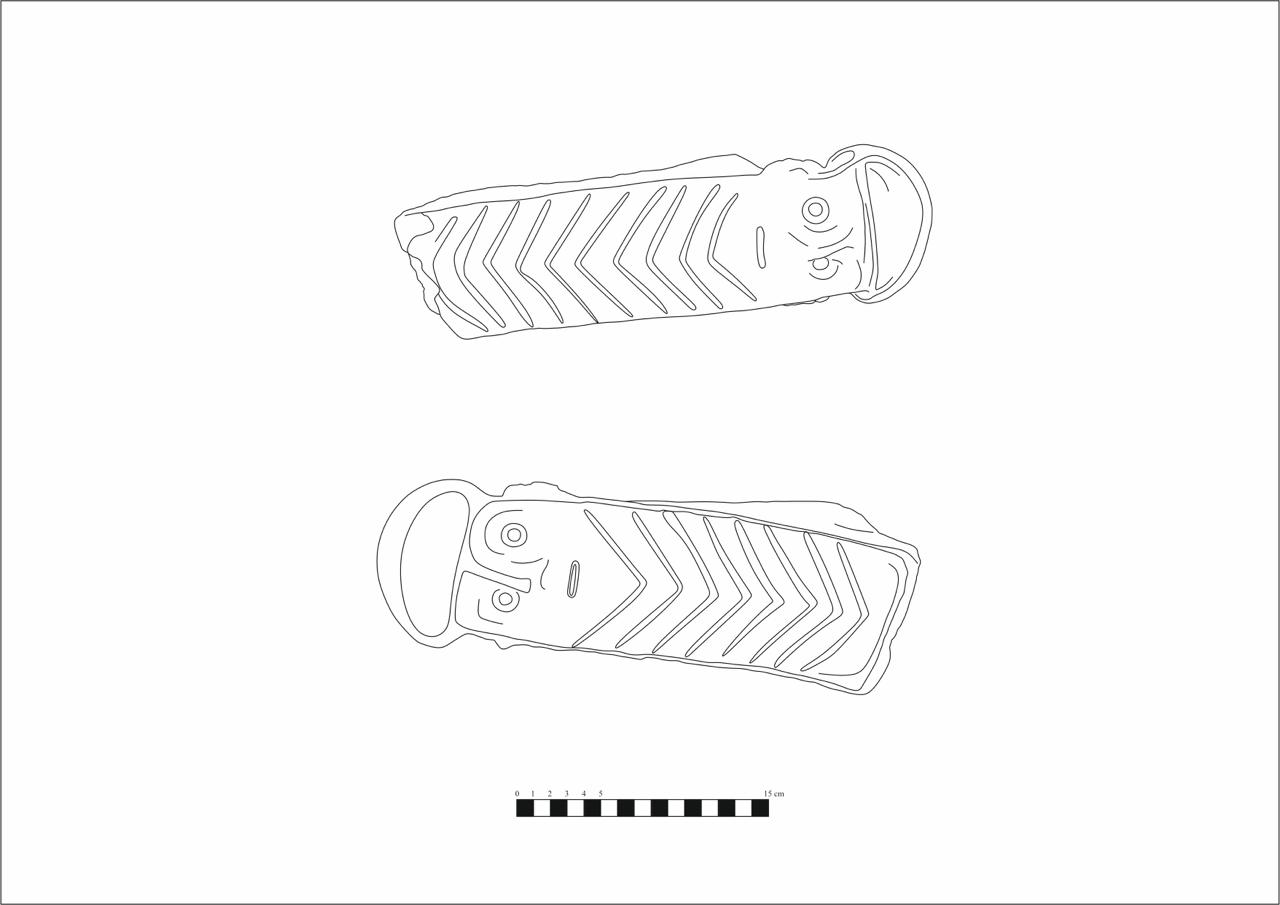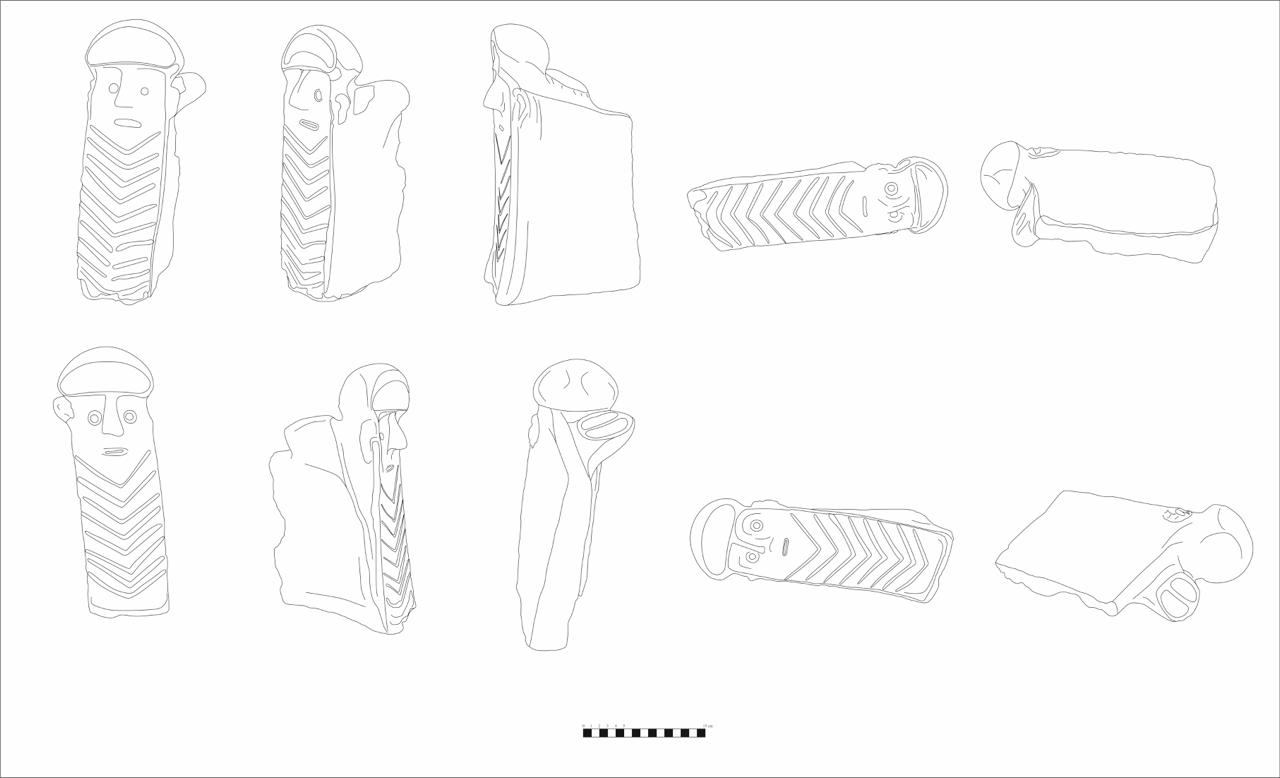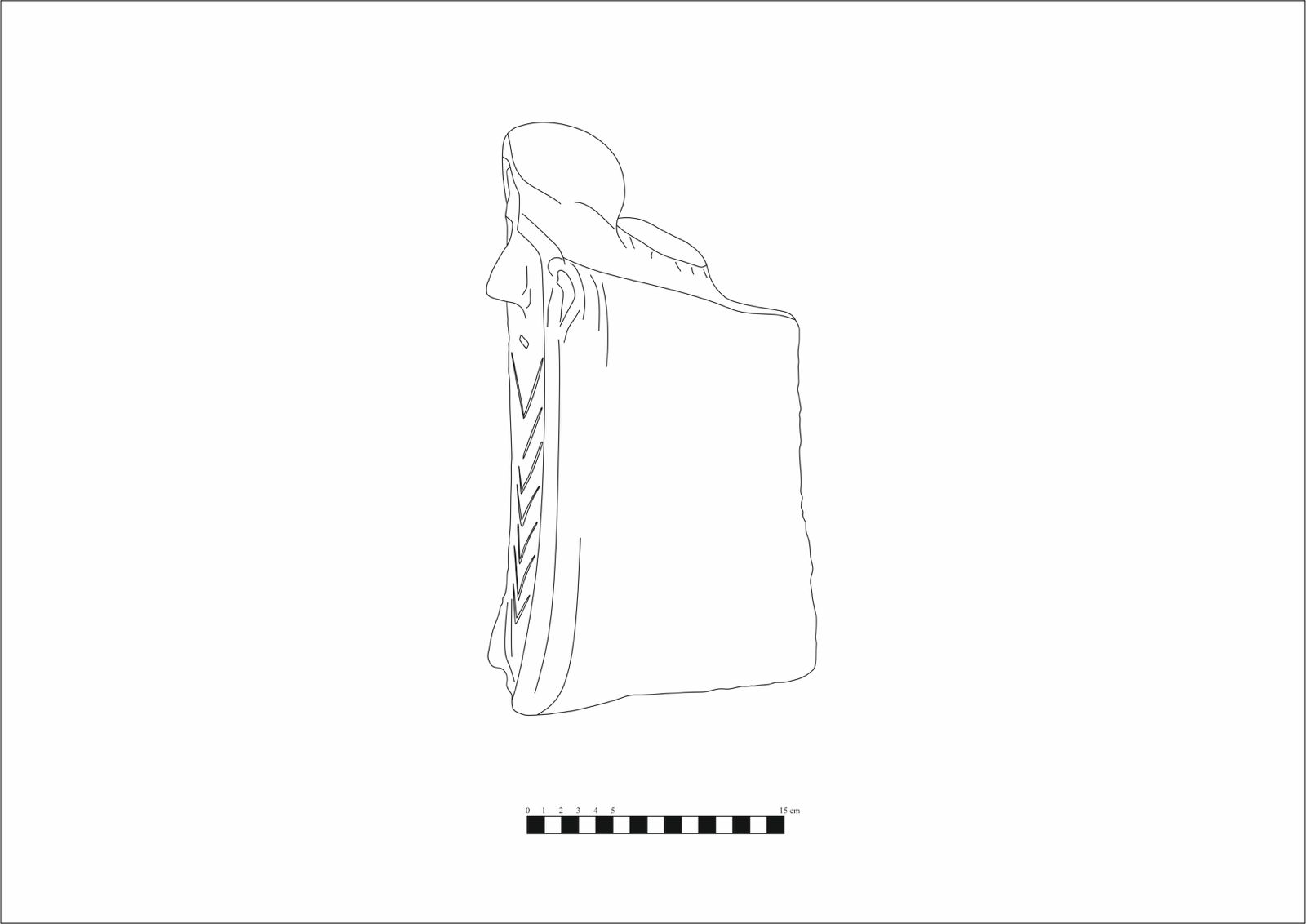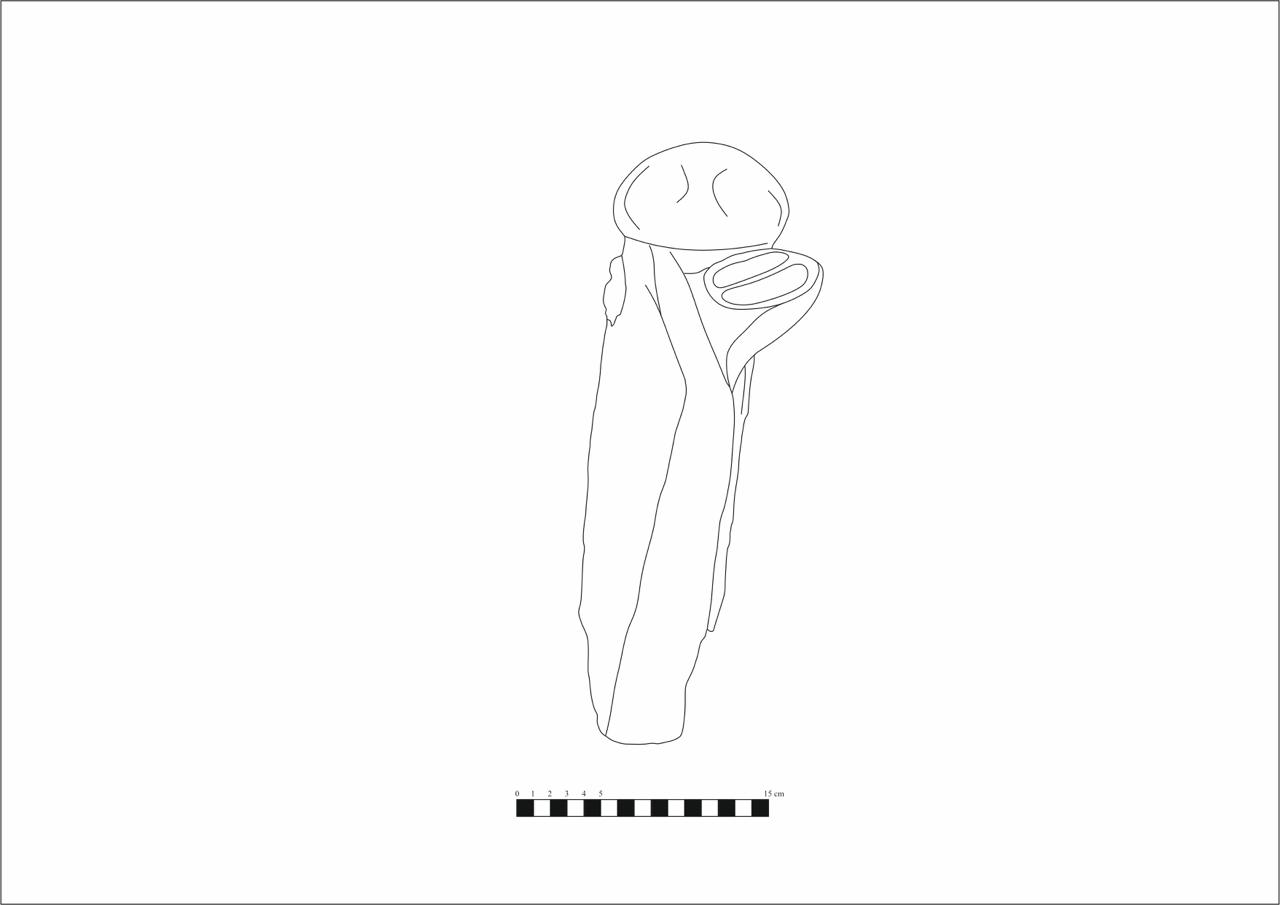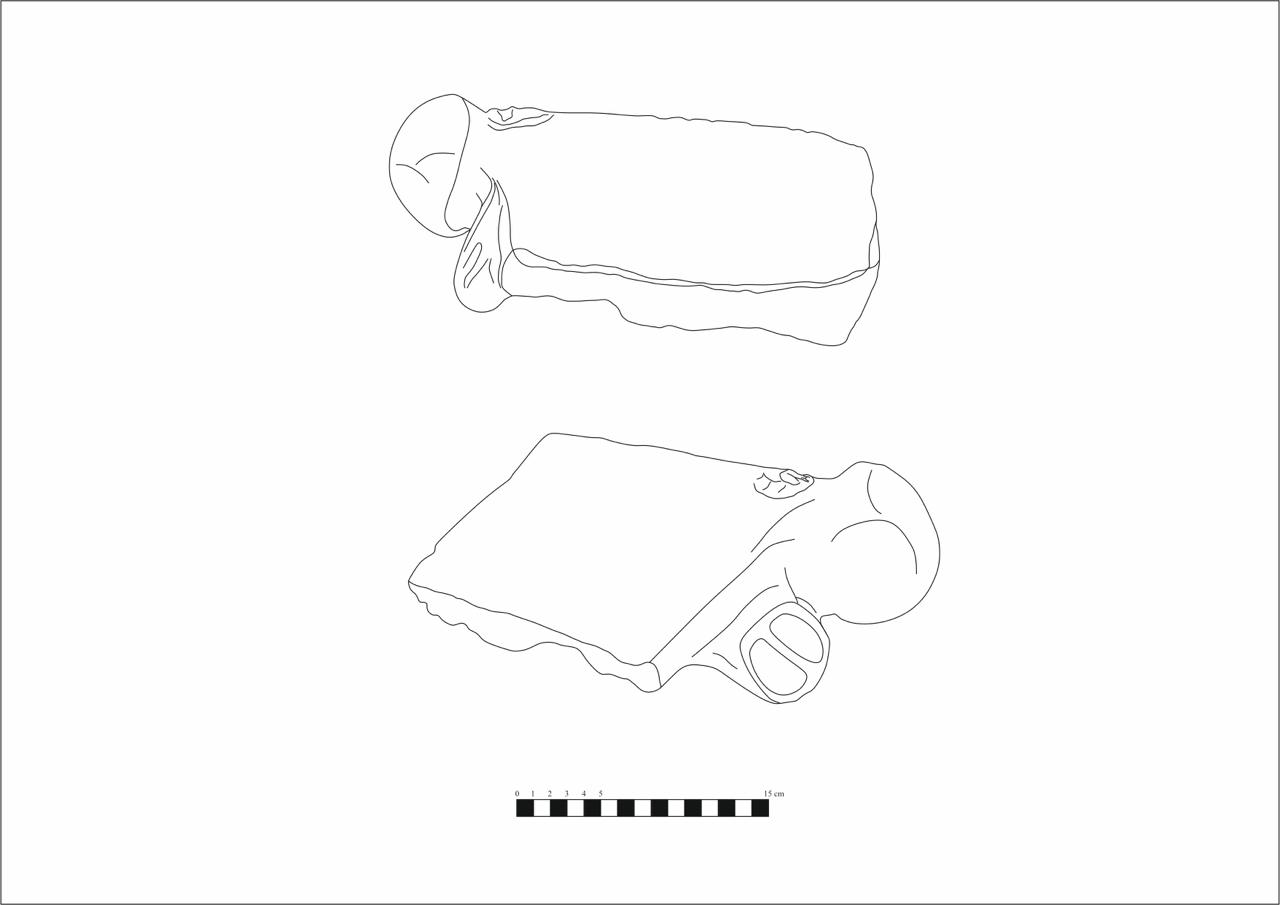
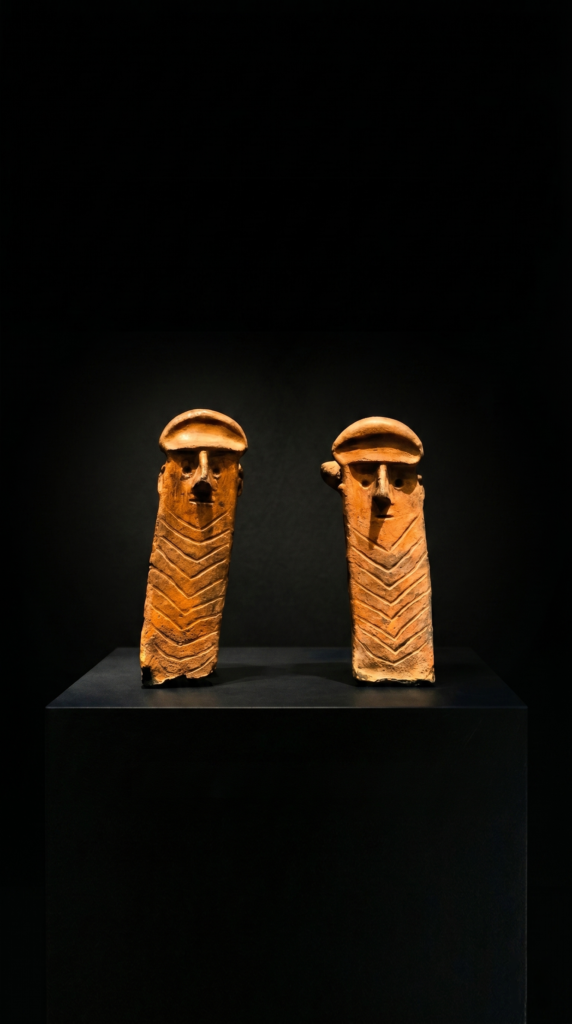
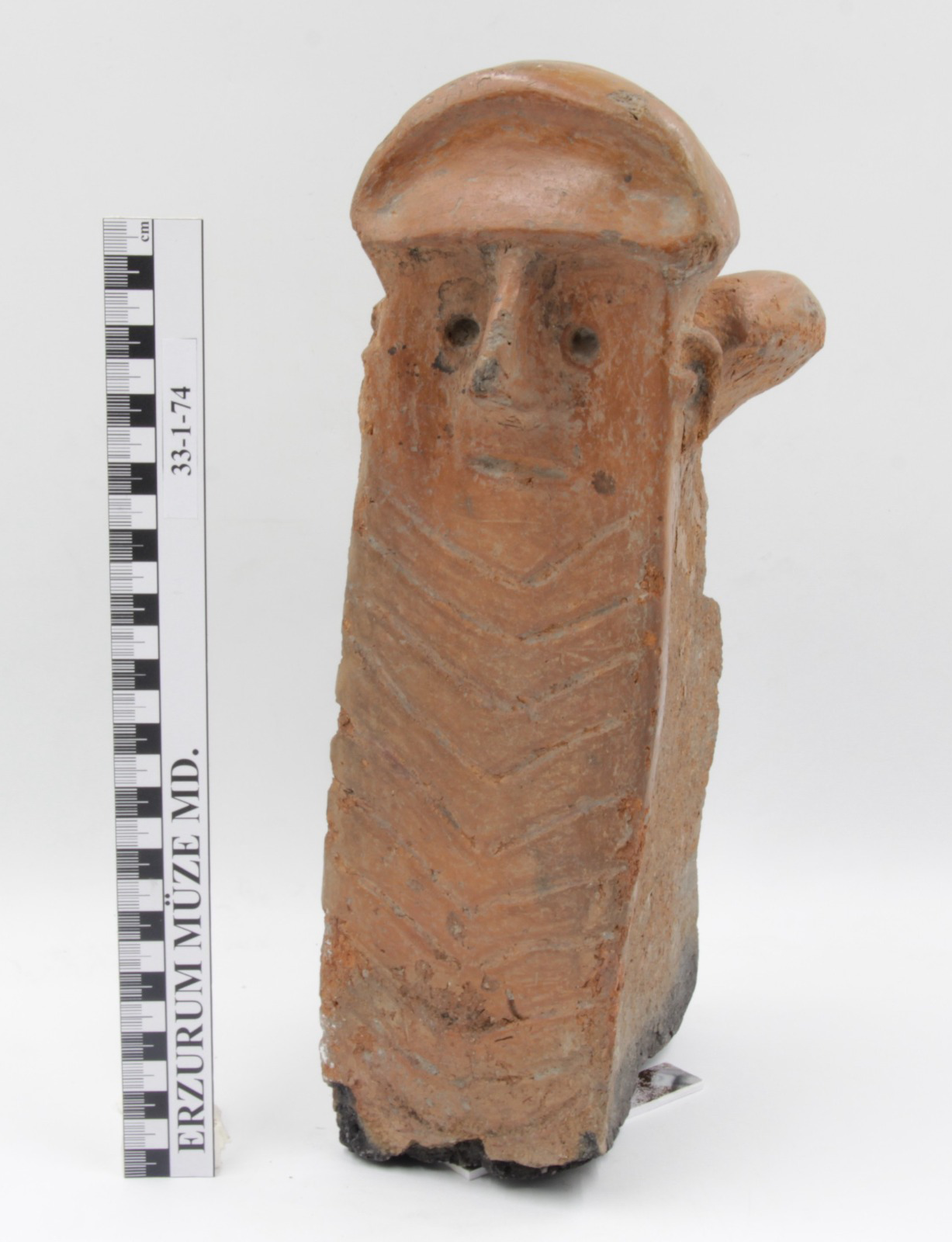
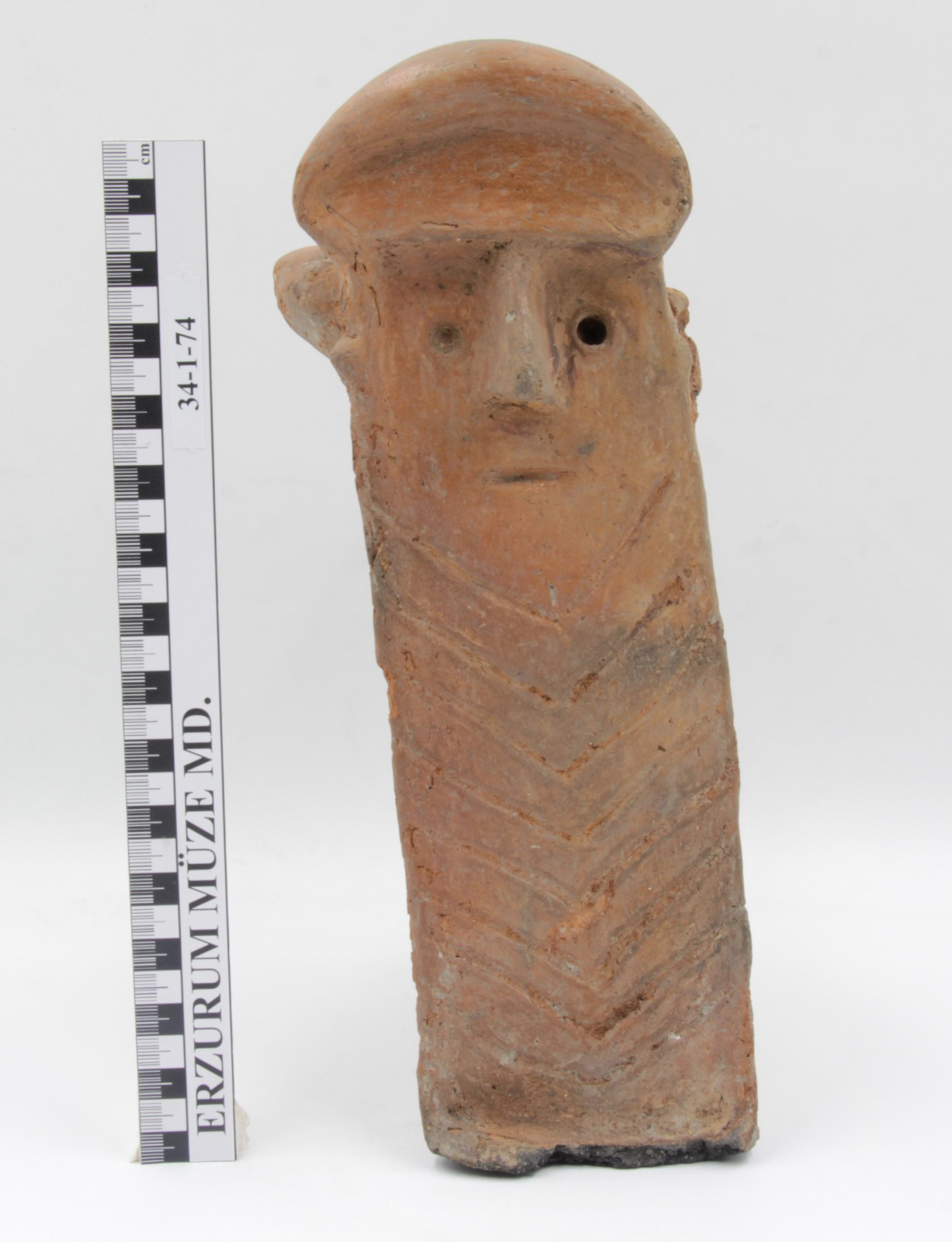
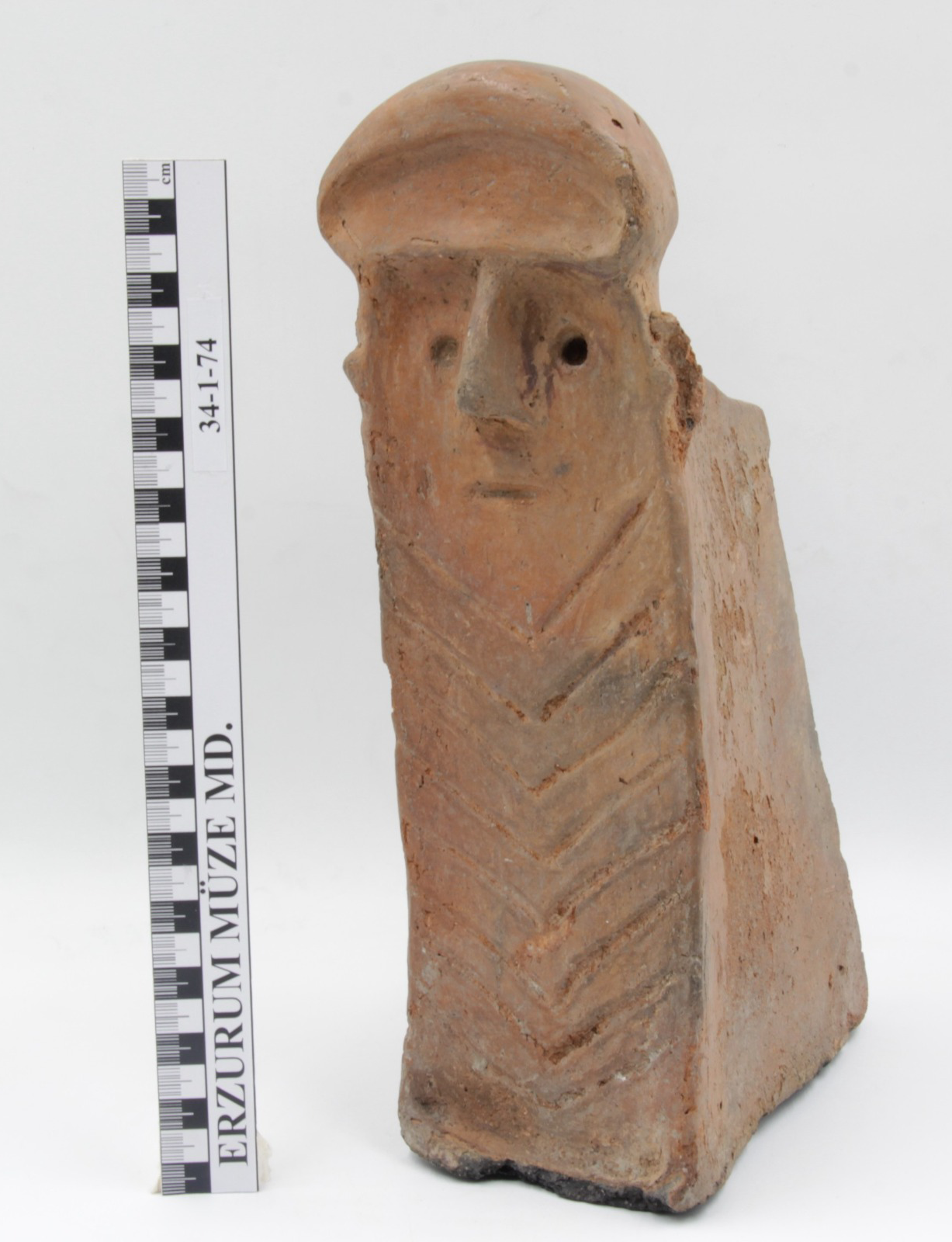
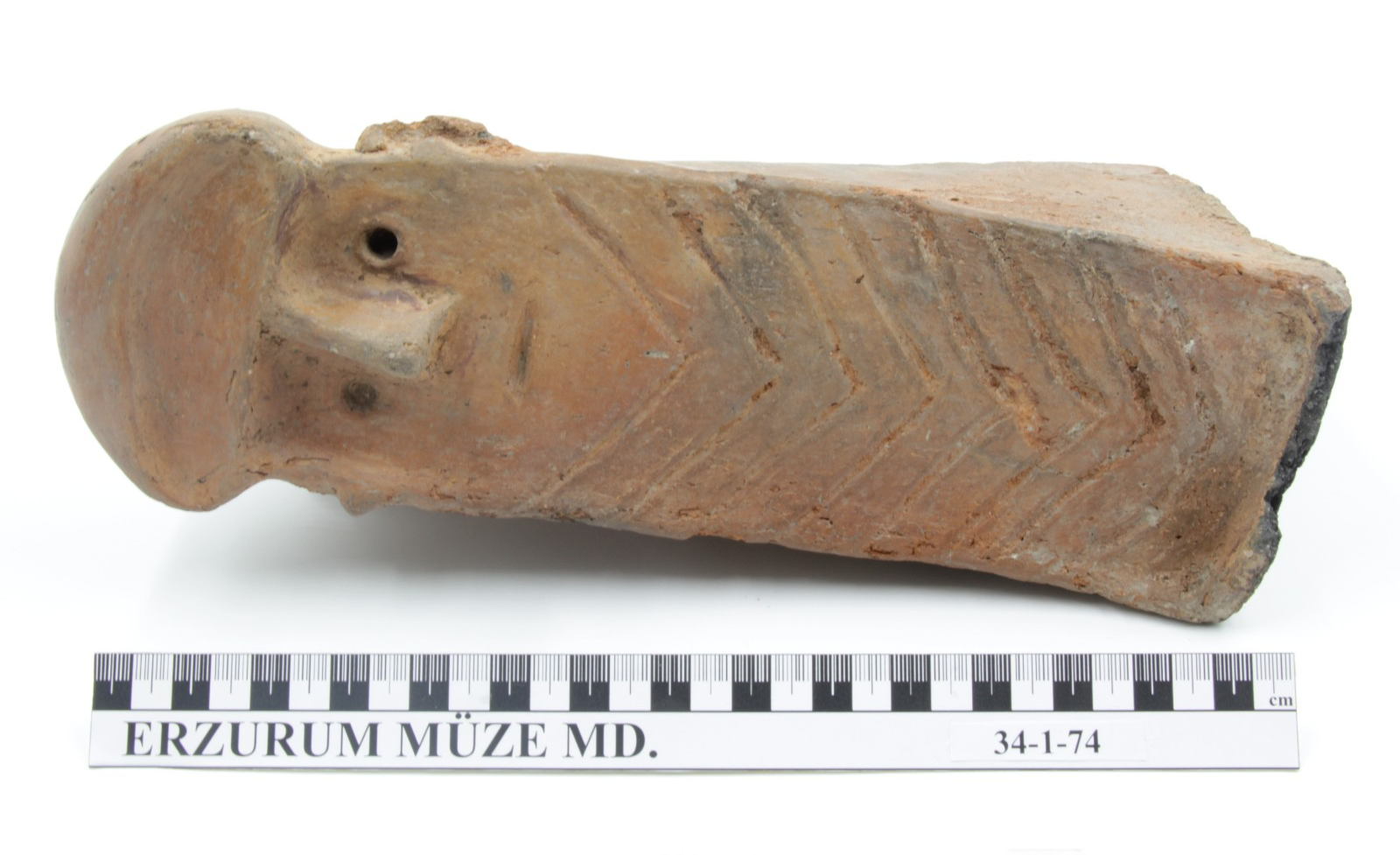
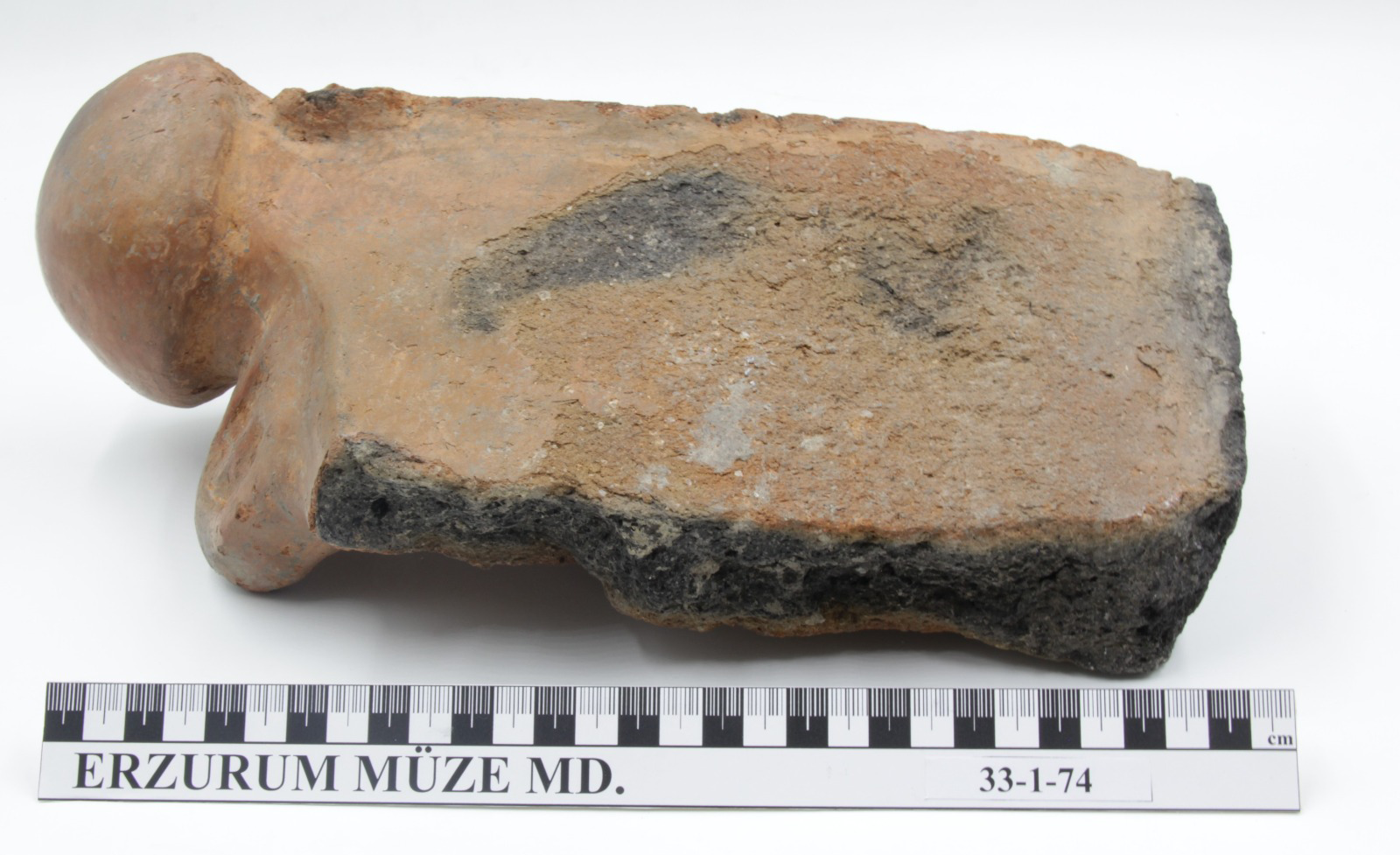
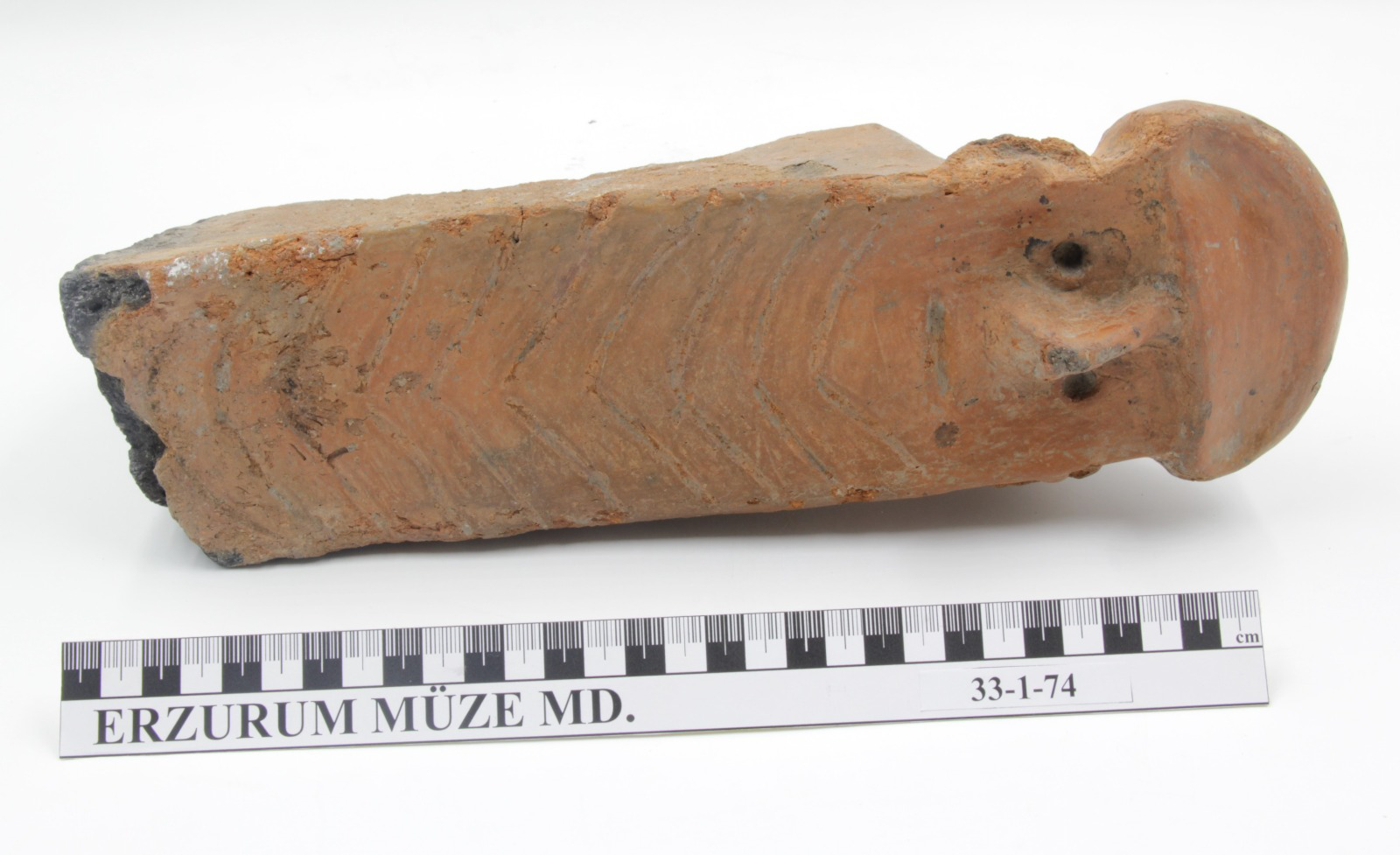
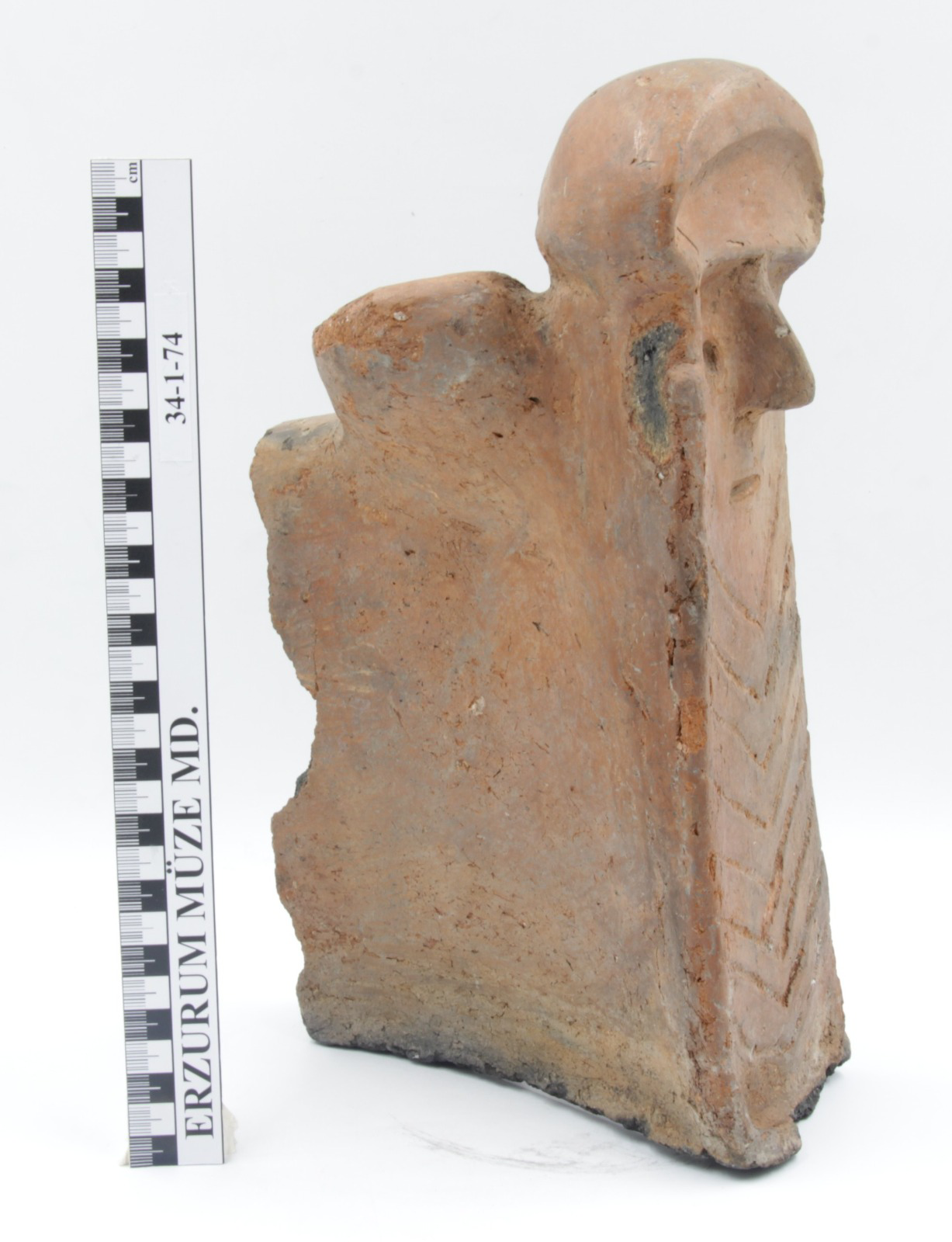
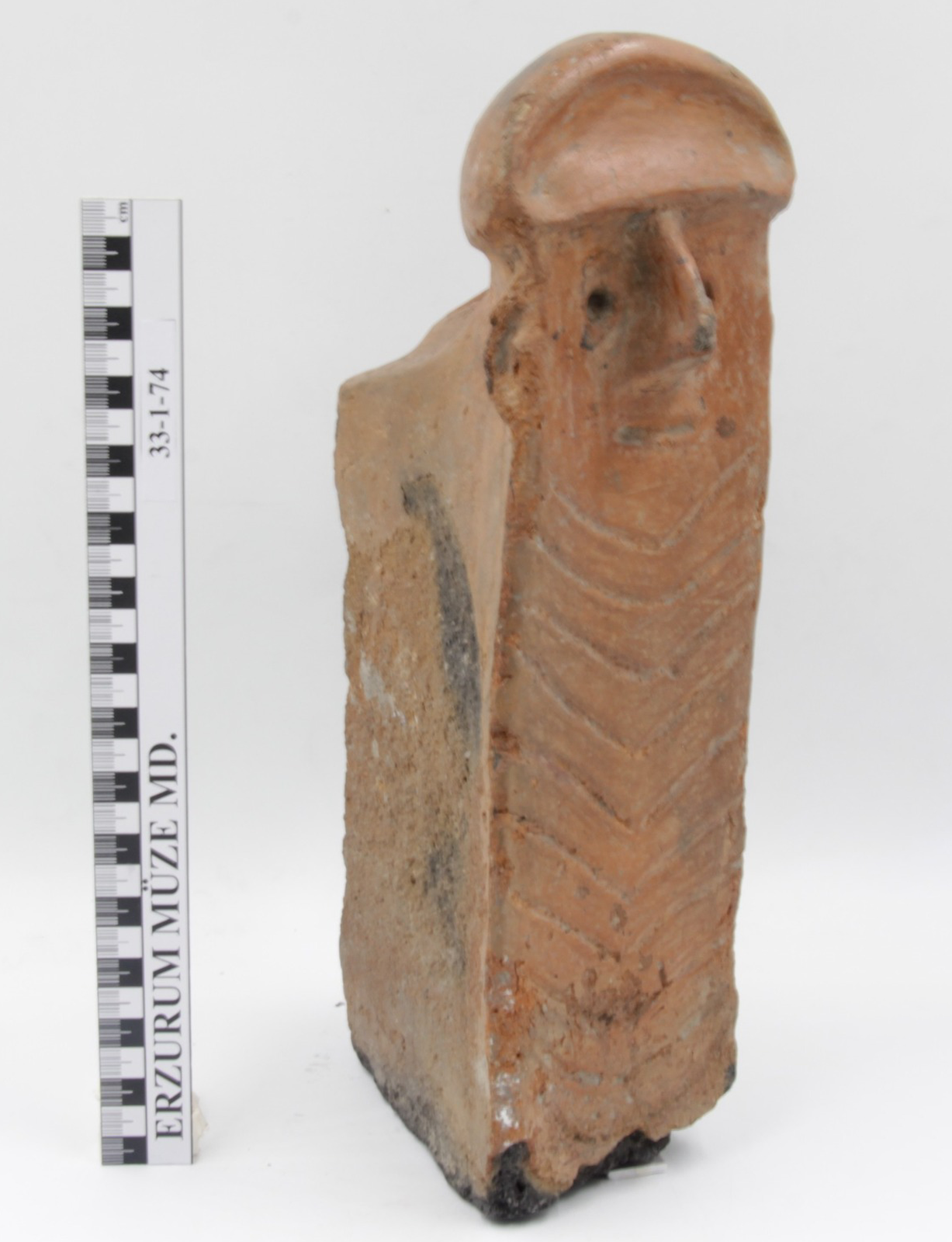
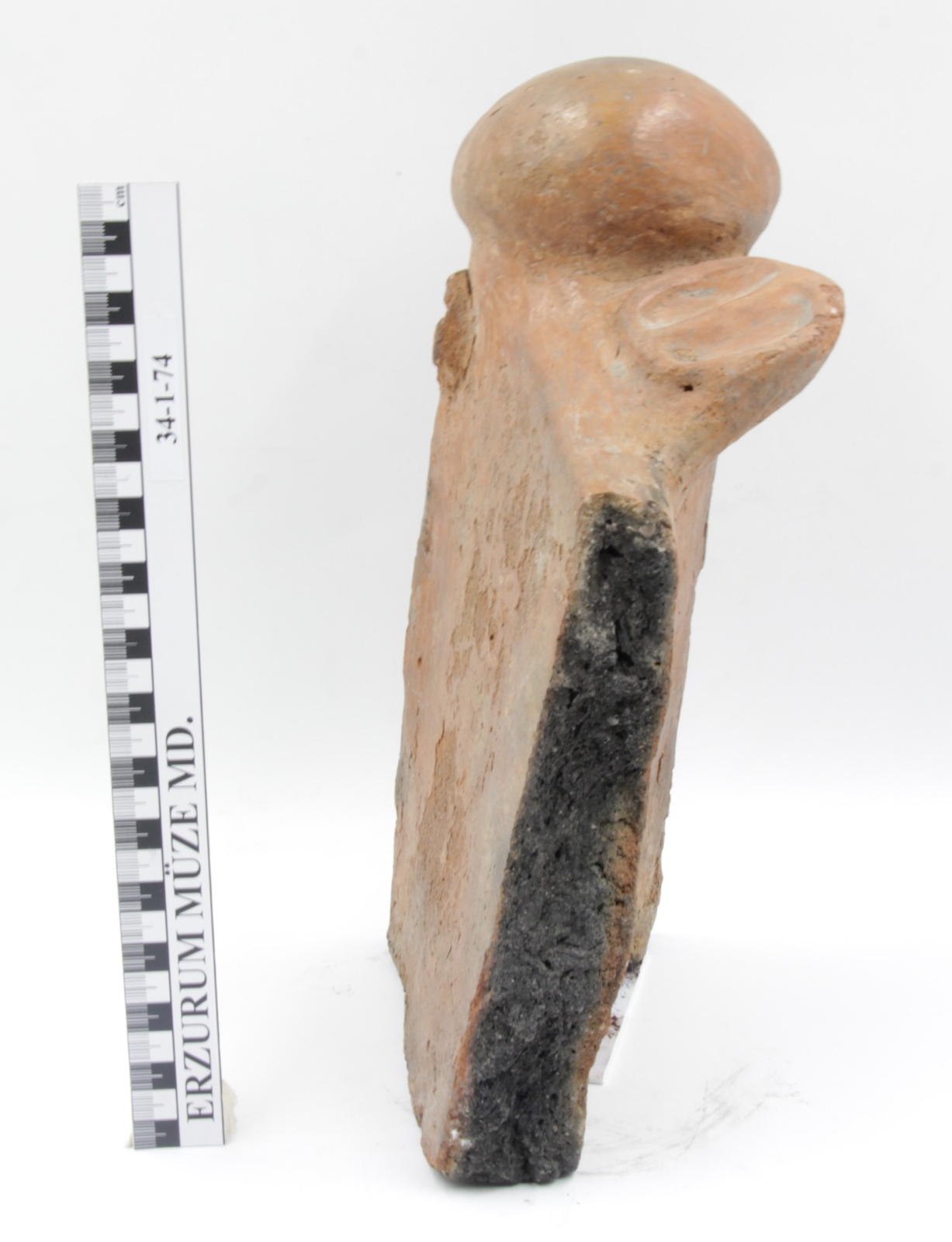
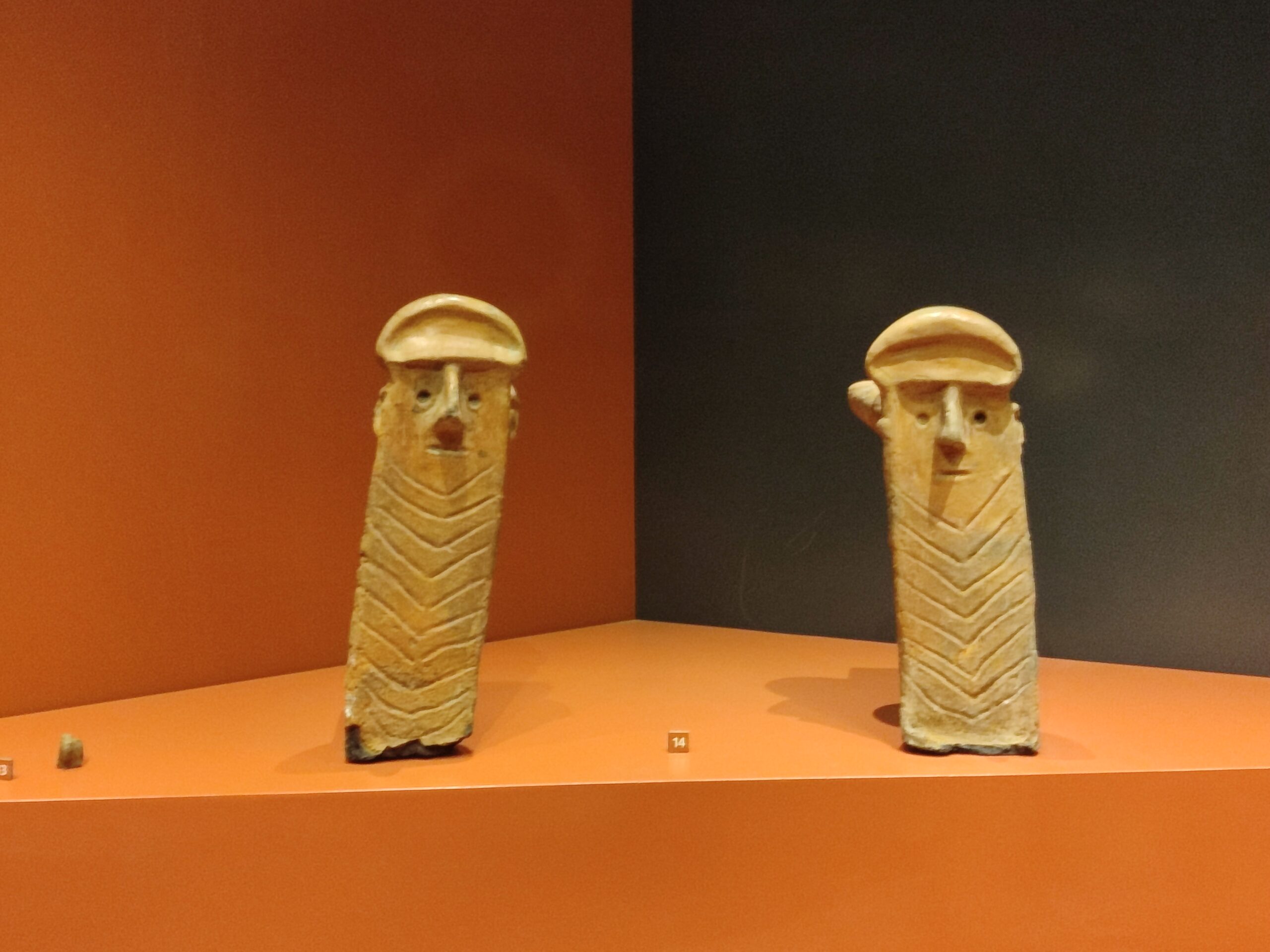
The Cinis Hearth was discovered at Cinis Höyük (Cinis Mound), located 40 km west of Erzurum within the boundaries of the Aşkale district, currently known as the Ortabahçe neighborhood. Following a geomorphological disturbance in the area in 1974, the artifact was found by a local villager and handed over to the Erzurum Museum, where it was put under preservation. Today, the artifact is on display at the Erzurum Museum. The Cinis Hearth was unearthed in two pieces, which belong to the front facade of the hearth. These two pieces of the anthropomorphic hearth are registered in the Erzurum Museum with inventory numbers 33.1.74 and 34.1.74. These horseshoe-shaped fragments serve as a crucial source of information regarding the religious beliefs and rituals practiced in Northeastern Anatolia during the Early Bronze Age. Similar examples have been encountered during excavations in the Amuq Valley. It is well known that various types of hearths belonging to the Karaz culture have emerged during investigations in Northeastern Anatolia. Evaluated within the framework of their belief system, it is evident that despite the wide geographical distribution of the culture, the Cinis Hearth shares a common origin. The presence of the anthropomorphic hearth tradition in this region is also an indicator of cultural unity. This circumstance underscores the significance of fire within the region's belief system. The untouchable nature of fire, despite the numerous conveniences it provided, was sufficient for its deification. Furthermore, fire was vital for heating and survival in this geography, a factor that likely reinforced its sacred status. It is believed that the local population led a patriarchal lifestyle and, accordingly, represented males on their hearths. The male form of these anthropomorphic hearths belonging to the Karaz culture supports this hypothesis. Through these hearths, characterized as human-faced males, they depicted their deities and utilized them in rituals in accordance with their beliefs (Takaoğlu, 2000).
The sanctity of the hearth is made possible by the very presence of fire. Since fire is sacred, the desire to prepare a dedicated space for it is entirely natural and a fundamental requirement of the belief system.
Regarding the sanctity of fire in Anatolia, as well as the significance and meaning of fire in Erzurum and its surrounding areas, Koşay states: "Julius Lewy indicates that ancient texts mention a hearth deity named 'Haşşa.' He further notes what a companion recounted regarding 'Haşşa': 'If a fire suddenly flares up and glows in a hearth in a Turkish village in İspir, they cry out "gil haşşa!". Gil means home/house in Chuvash Turkic and in some Caucasian languages, whereas in Anatolia, it signifies family'" (Koşay H. Z., 1979; Koşay H. Z., Turkish Historical Society Archives, 2026). Based on this documentation, it is highly plausible to assume the existence of a deity named "Haşşa," who was in all likelihood a fire god. Consequently, it is probable that the communities of the Karaz culture worshipped a fire deity in both Northeastern Anatolia and their other settlements.
Artifact Visuals
Technical Drawings of the Artifact